

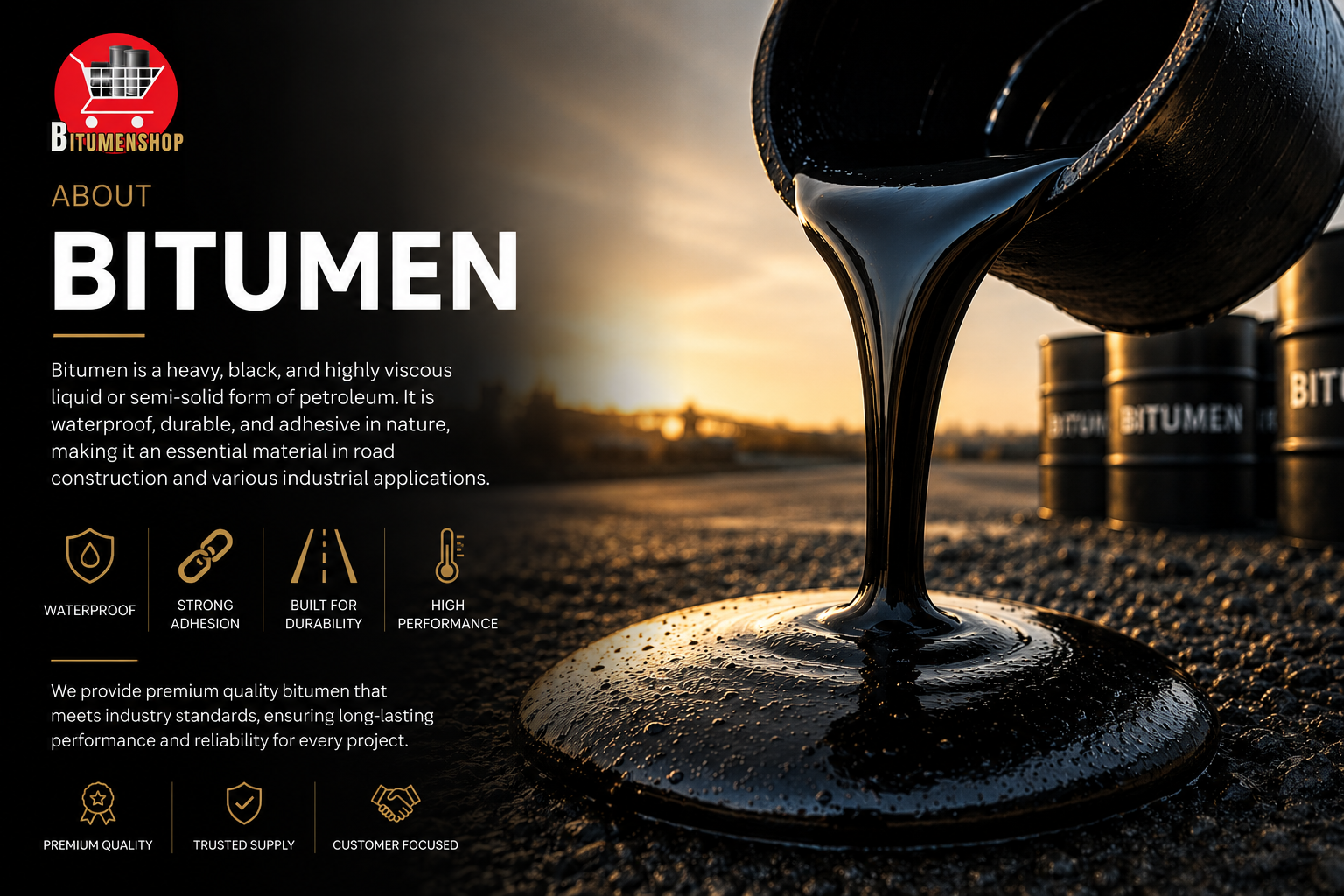
Bitumen is a petroleum-based, semi-solid hydrocarbon material widely used in road construction, waterproofing, and industrial applications. It is produced during the refining of crude oil, where lighter fractions such as LPG, gasoline, and diesel are removed. What remains after this process is a heavy residue known as Vacuum Bottom (Vacuum Residue or VBR)—the primary feedstock for bitumen production.
How Bitumen is Produced (Vacuum Bottom Process)
The production of bitumen begins in the refinery with atmospheric distillation, where crude oil is separated into different fractions. The heavier portion that cannot be vaporized under normal atmospheric conditions is then sent to a vacuum distillation unit. Under very low pressure, additional valuable fuels are extracted, leaving behind a thick, heavy residue called vacuum bottom.
This vacuum bottom is the key raw material used to manufacture refined bitumen. Depending on the desired grade and application, it is further processed through air blowing or controlled oxidation. In this stage, hot air is injected into the vacuum residue at high temperatures, increasing its viscosity and softening point while improving its performance for road and industrial use.
Refined Bitumen and Its Characteristics
Refined bitumen is a stable, black, and highly viscous material at ambient temperature. It is specifically engineered for durability, water resistance, and strong adhesive properties. In North America, it is often referred to as “asphalt cement,” while in other regions the term “asphalt” commonly refers to the full mixture of aggregates (stone, sand, filler) combined with bitumen for paving purposes. Typically, asphalt mixtures contain around 4–6% bitumen as the binding agent.
Conclusion
Modern bitumen production is a highly controlled refining process centered around vacuum bottom residue upgrading. This ensures consistent quality, performance, and suitability for global construction standards. Today, refined bitumen remains one of the most essential materials in infrastructure development due to its durability, flexibility, and water-resistant properties.